

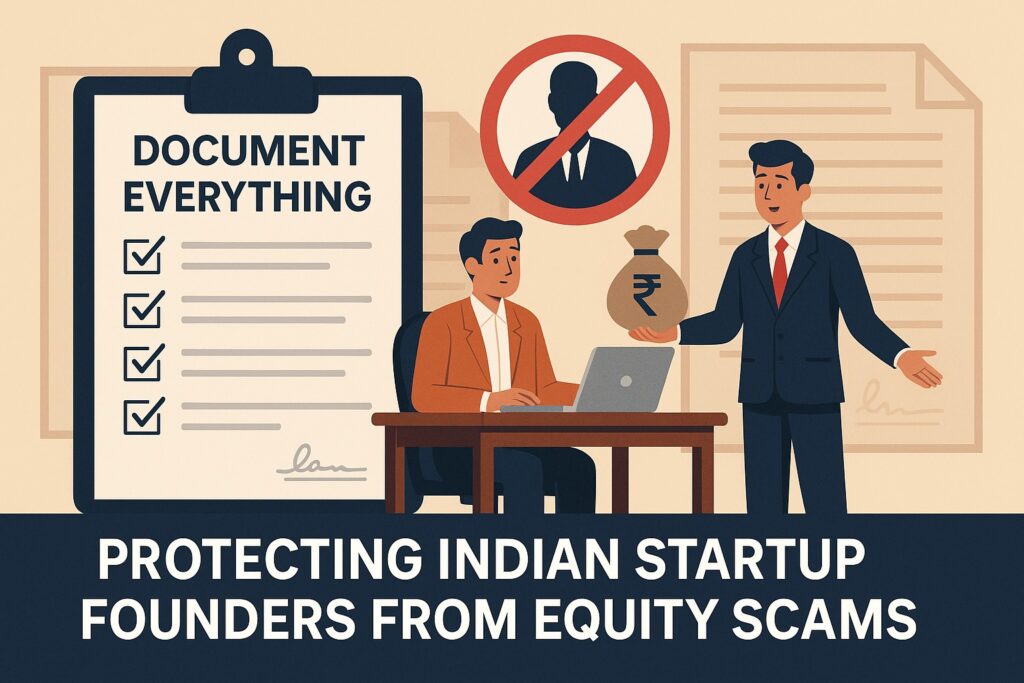
Early-stage startup founders in India often find themselves courted by self-proclaimed advisors, angels, or “strategists” offering mentorship or investor connections. These individuals may leverage flashy PR or media mentions to seem credible, all while coaxing founders into parting with precious equity or funds on the basis of vague promises. The unfortunate result? Many inexperienced founders have been blindsided – giving away slices of their company or money for help that never materializes. In this article, we’ll delve into why documenting every conversation and agreement that could lead to a transfer of equity or funds is absolutely critical. We’ll highlight cautionary tales (without naming names), examine relevant Indian legal frameworks (Companies Act, Contract Act, SEBI regulations), and lay out best practices for founder protection, from airtight advisory contracts (with vesting and performance clauses) to digital tools for record-keeping. We’ll also discuss cultural factors in India that can make founders more vulnerable, and provide practical checklists to help you navigate these situations safely and confidently.
The Hidden Threat of the “Friendly Advisor”
It often starts innocently: A charismatic mentor-type shows interest in your startup. They might be active on LinkedIn or frequently quoted in the media, building “credibility” through PR hype. They claim to know influential people or have industry expertise. Eager to have a seasoned guide, you engage with them. Then comes the hook – they suggest taking a small equity stake (or a fee) in exchange for introducing you to investors, getting you media coverage, or providing strategic advice. Too many founders have later discovered that these “advisors” offer little real value. They make vague promises (“We’ll open doors for you globally” or “We’ll 10x your growth through our network”) but once they secure a stake or payment, the results never come.
Such scenarios are alarmingly common. As one experienced founder pointed out, “Too many advisors are happy to offer vague promises and a hefty ask (your equity), without ever demonstrating real value” . In other words, unscrupulous advisors often talk a big game to win your trust and a slice of your cap table, but don’t follow through. Some of them operate as serial “startup advisors,” collecting equity from one naive team after another. They may even use their previous advisory roles (or minor press mentions) to appear legitimate to the next founder in line.
A Cautionary Scenario (No Names Needed)

Imagine a first-time founder in Bengaluru who meets a well-spoken “startup mentor” at an event. The
mentor has photos with famous CEOs and has been featured in a tech magazine – instant credibility. Over coffee, he praises the startup’s vision and casually says, “I could connect you to three big clients and an angel investor I know. I usually come on as an advisor for a ~5% equity, vested over a year – it’s how I support startups.” Flattered and excited, the founder agrees verbally on the spot, thinking 5% is a small price for explosive growth. Months later, none of those introductions materialize. The “advisor” shows up to a couple of meetings, gives generic advice, and then goes silent – yet he claims entitlement to the equity. Now the founder is stuck with a cap table issue and a lesson learned the hard way. Stories like this abound in India’s startup ecosystem. Fake consultants and self-proclaimed investors are preying on unsuspecting founders, tarnishing trust in the community . They often name-drop, flaunt media headlines, or even pay their way into panels or awards to appear credible. As an editorial on startup frauds noted, this is symptomatic of a culture driven by “hype, handshakes, and headline management” – meaning a lot of buzz and informal deals, but little substance. Don’t be swayed by optics. As one observer aptly put it: “Optics can launch you. Only substance can sustain you.” Always look beyond the hype.
Why You Must Document Everything
If there’s one takeaway for a new founder, it’s this: Get every important conversation or promise in writing. Email, text message, or a meeting minute – any written record is better than none. It might feel overly formal or distrustful, especially in a culture where handshake deals are common, but it’s vital. “What’s NOT written down doesn’t exist,” warns startup lawyer Karan Dahiya. “Verbal agreements don’t hold up in court… I’ve seen founders lose equity, money, and even control of their company—all because they ‘trusted the process’ instead of protecting themselves.” In other words, a handshake isn’t protection; a signed document is. Here’s why documentation is so critical:
- Clarity and Memory: Conversations can lead to different understandings. A quick email to summarize who promised what ensures both parties are on the same page. Unlike a chat over coffee, an email thread can be referred back to if disputes arise. As legal experts note, oral agreements are “memory-based” and can easily lead to “obstacles in future deals if some terms are not clear” . A written record prevents “he said, she said” scenarios later.
- Enforceability: Under the Indian Contract Act, 1872, oral agreements can be legally binding if they fulfill all essentials of a contract (offer, acceptance, consideration, intent) . However, proving the terms of an oral contract in court is extremely hard. The law itself advises that it is “always best to have a written contract” to avoid disputes . In a clash of narratives, the side with written evidence will almost always prevail.
- Legal Compliance: When equity or funds are at stake, Indian laws require documentation anyway. For instance, the Companies Act, 2013 mandates that any allotment of shares must follow due process (board resolutions, filings, etc.), and “formal agreements outlining terms such as vesting schedules and advisor responsibilities” are part of the issuance process . If someone is asking for equity without paperwork, they’re asking you to break the rules – a huge red flag.
- Preventing Scope Creep: Writing things down forces everyone to be specific. An advisor saying “I’ll help your strategy” is nebulous; but if written, you’d specify how and what for (e.g. “Advisor will meet with founders for 2 hours monthly and introduce at least 5 investor leads in 6 months”). Vague promises can be sugarcoated verbally, but a written draft demands clarity.
Finally, documenting doesn’t just mean formal contracts (we’ll get to those next) – it includes every key interaction leading up to an agreement. If you discuss equity or payment on a phone call, send an email afterward: “To recap our conversation, you offered X for Y% equity, contingent on Z milestones…” If the other party objects to summarizing in writing, that’s a sign of trouble. Honest players don’t mind clarity; shady ones thrive in ambiguity.
Legal Safeguards: Indian Frameworks Every Founder Should Know
You don’t need to become a legal expert, but understanding the basics of Indian business law will save you from costly mistakes. Here’s a breakdown of key legal frameworks and how they protect you when you use them properly:
The Indian Contract Act, 1872
The Contract Act is the bedrock of all agreements in India. It says a contract is valid if parties freely consent to it, for a lawful consideration, etc. Notably, it does not require contracts to be in writing – an oral contract “is equally valid as a written one” so long as it meets the criteria . Sounds simple, but as
discussed, the lack of written proof makes enforcement a nightmare. In fact, Indian courts can enforce verbal agreements, but you’d need strong evidence of their terms – usually some written trace or witness testimony. So practically, treat an unwritten promise as unenforceable.
To leverage this law in your favor: formalize your agreements. A quick Letter of Understanding or an email chain can serve as evidence of a contract’s terms. Also, the Act requires that contracts with minors, or for illegal objectives, etc., are void – so ensure the person you deal with is authorized (e.g. if they claim to represent an investor, do they have that authority?).
One more thing – consideration (something of value exchanged) is needed for a contract. If an advisor promises help and you promise equity, both are consideration. If someone promises you a favor “out of goodwill” with nothing in return, that arrangement might not be enforceable. So, ensure any equity given has documented services or deliverables attached as consideration (for instance, advisory services).
The Companies Act, 2013
The Companies Act governs how shares and directorships in a company are handled. This is crucial when equity is being discussed. Key points for founders:
- Issuing Shares Requires Procedure: You can’t just verbally agree to give someone shares and call it done. For a private limited company, new shares must be issued either via a rights issue to existing shareholders or via a private placement or through an ESOP/sweat equity scheme, all of which entail paperwork. Typically, Section 62(1)(c) allows issuing shares for considerations other than cash (like services from an advisor) but it “will have to follow the private placement process under Section 42” . That means you need a board resolution, an offer letter, filing of return of allotment, etc., and the advisor must provide an invoice for their “services” equal to the fair value of the shares. It’s complicated, but the takeaway is: if you haven’t done the formal process, that person isn’t a legal shareholder yet.
- Founders Transferring Existing Shares: Instead of issuing new shares, sometimes advisors ask founders to transfer a bit of their own shares. Even then, a share transfer form (Form SH-4) and board approval are needed. Without duly stamped transfer forms and company registry updates, the transfer isn’t legally effective. Don’t ever transfer shares (or cash) on a promise – do it through proper legal channels with documentation.
- Advisors and ESOPs: Indian law explicitly prohibits giving employee stock options (ESOPs) to anyone but employees or directors (with a few exceptions) . Advisors who are not employees are ineligible for ESOP by law . So, if someone says “just issue me ESOPs for my advice,” know that you’ll have to either make them some sort of official consultant (with a salary, which isn’t usually the case) or use another mechanism. The common route is issuing shares as “sweat equity” for services or via the aforementioned Section 62 route, which again underscores that a formal contract and board approval are mandatory . Without a contract for services, a “sweat equity” issuance falls flat.
- Liability and Compliance: Remember that violating the Companies Act can have serious consequences. If you casually promise equity and the person later fights for it, you could end up in a legal quagmire or even accusations of violating minority shareholder rights if you try to back out. It’s better to say “we will formalize this with proper paperwork” from the beginning, which will deter most shady actors (who prefer deals in shadows). If they are genuine, they will understand that you need to follow the law.
SEBI Regulations (When Applicable)
For most early-stage startup deals, the Securities and Exchange Board of India (SEBI) might seem distant, as SEBI mainly regulates public markets and registered intermediaries. However, there are a couple of scenarios where SEBI’s rules could indirectly protect you:
- Investment Advisers Regulations, 2013: If someone is giving you investment advice or promising to connect you with investors for a fee or equity, note that SEBI expects such people to be registered advisors or brokers. “Any intermediary that does not have the IA (Investment Adviser) certification cannot provide investment advice in any format,” and registered advisers “cannot take any commissions or fees except advisory fees” . In plain terms, legitimate financial advisors can’t legally take a cut of your fundraising or equity without proper registration. So if a person is effectively acting as a broker (introducing you to investors) and demanding 5% of funds raised or equity as compensation, that’s a red flag. Many honest advisors avoid asking for such compensation upfront specifically because it can breach SEBI’s conflict-of-interest rules.
- Angel Investment Regulations: SEBI regulates Angel Funds (Category I AIFs) and how investments happen, but an individual claiming to be an “angel” might not be part of a regulated fund at all. Ask yourself: is this person a SEBI-registered investment advisor or part of a registered angel fund or venture capital fund? If not, you should be extra cautious. Of course, private individuals can and do invest in startups directly (that’s legal), but if they are “posing” more as an advisor to get equity without actually investing cash, they’re skirting the spirit of the law. Keep an eye out for those who drop stock market advice or quasi-investment tips on social media – SEBI has been cracking down on such unregistered “experts” because they often mislead people .
In summary, Indian laws are on your side if you use them correctly. Insist on written contracts (Indian
Contract Act principle), comply with proper share issuance norms (Companies Act), and be wary of anyone operating in a regulated domain without credentials (SEBI rules). These frameworks exist to protect against exactly the kind of exploitation inexperienced founders face. Use them as your shield: when you say “I need to paper this in accordance with the law,” you’re not being difficult – you’re being prudent.
Protect Yourself with Solid Contracts and Terms
Handshake agreements and friendly verbal understandings should immediately be followed up with a written contract when equity or significant money is involved. An Advisory or Service Contract is your best friend in these situations. It doesn’t have to kill the positive vibe of a partnership; rather, it formalizes it so both sides know what to expect. A well-drafted contract will scare away the pretenders and solidify the commitment of genuine advisors.

Here are best practices for drafting an advisor/consultant contract that protects you (and is fair to the other party):
Key Clauses to Include in Advisor Agreements
- Role and Responsibilities: Clearly define what the advisor will do for your startup. Is it making introductions? Providing weekly product feedback? Opening doors to certain clients? Spell it out. This manages expectations and gives you a basis to say later “X was or wasn’t delivered.” Many founders skip this and end up with an advisor who claims “just being available if you needed me” was their role – which is practically no commitment at all. Don’t allow ambiguity. As one startup mentor bluntly said, “demand high standards” and get specific commitments rather than “happy to help sometime” offers .
- Equity Compensation and Vesting: If you are giving equity, do NOT give it all outright. Use a vesting schedule – a mechanism where the equity is earned over time or upon hitting targets. For example, if 2% equity is the grant, you can vest it quarterly over 2 years (so roughly 0.25% each quarter). If the person disappears after 3 months, they only earn maybe 0.25% instead of the full 2%. Vesting should ideally include a “cliff” period – a trial phase during which if things don’t work out, nothing is owed. A common approach (and the one used by Founder Institute’s FAST agreement standard) is a 3-month cliff for advisor equity, meaning if the relationship is terminated in the first 3 months, the advisor gets zero equity . This protects you from a quick fallout. Only after surviving the cliff would monthly or quarterly vesting begin. Bottom line: Equity must be earned, not given for mere promises.
- Performance or Milestone-Based Triggers: Wherever possible, tie equity or payments to specific outcomes. For instance, “Advisor will receive 0.5% upon successfully introducing an investor who invests at least ₹X in the company” or “If Advisor’s referred clients generate ₹Y in revenue within 12 months, an additional 0.5% will vest.” This is performance-based equity. It ensures you only dilute your company for actual results. Be reasonable – the milestones should be achievable and within the advisor’s influence – but make it clear that empty talk won’t vest shares. Many seasoned founders do this: equity for advisors isn’t a gift, it’s a swap for real value.
- Time Commitment and Availability: Specify how much time or effort the advisor is expected to devote. It could be “one meeting per week” or “phone calls as needed, approximately 5 hours a month.” Without this, you may find your “strategic advisor” is too busy juggling 20 other startups. In fact, a good contract will bar an advisor from taking on too many roles that conflict – you might include that the advisor confirms they are not currently advising any direct competitor, and will inform you if they take on any role that could limit their time for you. It’s been noted that “I advise 20+ startups” is often code for “I’m not really helping any of them.” So ensure exclusivity or limited commitments are agreed upon if it matters to you.
- Confidentiality and IP Rights: An often overlooked but crucial part – include a confidentiality (NDA) clause to protect your sensitive information. If the person will learn about your business strategies or code, they must agree not to misuse or disclose it. Additionally, include an Intellectual Property clause stating that any work product or inventions they contribute (if applicable) belongs to the company. For example, if an advisor tweaks your marketing strategy document, you don’t want them claiming later that it’s their IP. Most advisor agreements state that any contributions are “works made for hire” and belong to the company. This is standard and important if the advisor is more hands-on.
- Clear Termination Rights: This is vital. You need the ability to fire the advisor if the relationship isn’t working – and to stop any further equity vesting or even claw back unearned equity. The contract should allow you to terminate for any material breach or even without cause (perhaps with a notice period). Upon termination, typically the advisor keeps only the equity vested up to that point, and any unvested portion is canceled. You might also include a clause that if the advisor engages in misconduct or violates confidentiality, you can terminate and even repurchase any vested shares at a nominal price (this is a bit tougher to negotiate, but some agreements have a “for cause clawback”). Don’t leave an open-ended arrangement. Just as employees can be let go, an advisor can be disengaged – you need that flexibility. If your agreement is silent on termination, you could end up in a dispute where the advisor claims you can’t revoke what was promised.
- No Transfer of Advisory Role or Equity without Consent: You don’t want your advisor selling or transferring their unvested equity or role to some random person. Include that the agreement (and any equity under it) is personal to the advisor and can’t be assigned. Also, ideally include a standard clause that any disputes will be resolved by arbitration or a specific jurisdiction – to avoid them dragging you to a far-flung court unexpectedly.
These clauses might sound heavy, but they are standard in well-run startups. In fact, a proper advisor contract template (like those provided by startup legal services) “balances the interests of both parties by clearly defining the advisor’s role, compensation (equity), confidentiality, and IP rights” in compliance with Indian laws . You’re not doing anything unusual – you’re operating like a serious founder. If an advisor balks at a reasonable contract, that’s a sign they might not have had real intent to commit or they had ulterior motives. As the saying goes, “Trust is good, but contract is better.”
Best Practices for Using Contracts and Advisors Wisely
- Use Standard Templates: Don’t reinvent the wheel – use proven templates such as the Founder Institute’s FAST Agreement for advisors or other Indian-ized templates (many are available via startup lawyers or platforms). They cover the clauses above in plain language. For example, the FAST agreement sets typical equity ranges (0.25%–2% depending on advisor seniority and stage of startup) and includes that 3-month cliff . Starting from a template ensures you don’t forget key terms.
- Consult a Lawyer for Review: While bootstrapped founders often hesitate to spend on lawyers, getting a professional legal review of any equity-sharing agreement is worth it. A lawyer can ensure it meets Companies Act requirements (e.g., wording it as a consulting agreement with equity compensation under Section 62(1)(c) etc.) and that it doesn’t inadvertently give away more than you intended. It’s a small cost to prevent very expensive mistakes down the line.
- Document Board Approvals: Once you and the advisor sign an agreement, formally record it in your company’s board meeting minutes and pass a resolution if needed (especially if you’re issuing new shares or creating an ESOP pool for it). It’s not only legally required but also evidence that all cofounders/directors were on the same page. Founders have lost control of their companies by casually handing equity to outsiders without other co-founders’ knowledge – leading to ugly internal disputes. Don’t let that happen: take approvals, document them. As Capbase (a cap table platform) advises, even board meeting minutes are critical to document decisions like granting equity .
- Regularly Review Advisor Performance: Set a schedule (perhaps every 6 months) to review whether the advisor is adding value. If not, consider parting ways amicably. Too often, startups keep deadweight advisors on the cap table out of inertia. Remember, every percent of equity is a piece of your startup’s future gains. Treat it with the value it deserves.
Digital Tools & Habits for Bulletproof Documentation
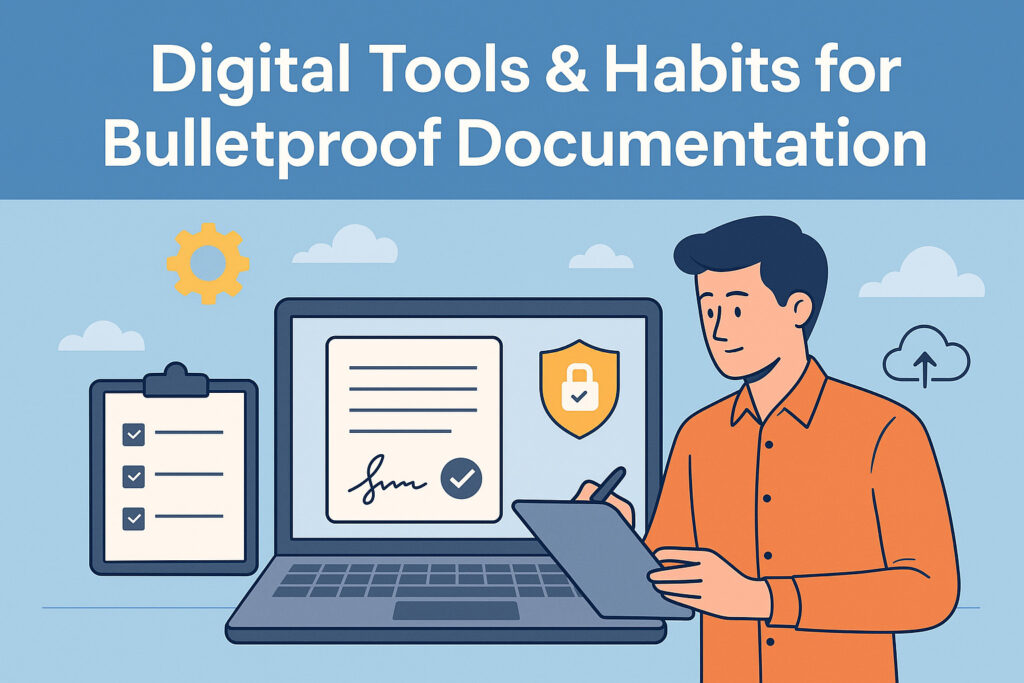
In today’s digital age, there’s no excuse for losing track of communications or documents. “I can’t find that paper” or “I don’t recall that chat” can be easily avoided by using the right tools and habits. Here are some practical ways to ensure every important communication and transaction is well-documented:
- Email is King: Always move critical conversations to email (or at least summarize them there). Email provides a timestamped, searchable record that is hard to tamper with. If you discuss terms in person or on a call, send a follow-up email. For example: “Great speaking today. To recap, you’ll introduce us to XYZ Corp’s CEO by next month, and in return we discussed a 1% advisory equity on a 2-year vesting schedule, starting after a 3-month trial. Let me know if I missed anything.” This not only records the terms but also gives the other party a chance to correct any misunderstanding in writing. Many founders shy away from this thinking it’s too formal – do it. It can be as casual in tone as you want, but get the facts in the thread.
- Use Cloud Storage for Documents: Maintain a secure folder (Google Drive, Dropbox, OneDrive, etc.) for all your startup’s legal and financial documents. Save scanned copies of signed contracts, board resolutions, share certificates, payment receipts – everything. Also, save email threads as PDFs if they are very important. This way, even if you change email accounts or someone deletes something, you have a backup. There are also cap-table management platforms (like Qapita, Carta, etc.) that not only track your equity but often allow uploading relevant docs for each transaction. The key is organization – when an issue arises, you should be able to pull up the evidence in seconds. Digital Signatures and Time-stamps: Use digital signature services (DocuSign, Adobe Sign, or Indian equivalents like DigiLocker or eSign services) for agreements. These provide an audit trail (IP addresses, time-stamps) that can be used to authenticate the document if needed. Plus, they make it easy for both parties to have original signed copies instantly. Similarly, if you exchange WhatsApp or SMS messages for minor discussions, consider exporting those chats periodically and emailing them to yourself. It might sound paranoid, but those chat logs can serve as evidence of what was communicated. In India, even WhatsApp chats have been admitted as evidence in courts for commercial disputes (with proper verification). So, don’t delete important chat histories – archive them.
- Use Payment Channels that Leave a Trail: If any money is changing hands – e.g., you are reimbursing an advisor’s expenses, or an advisor is investing some money – use bank transfers or UPI or any method that generates a record. Avoid cash transactions. The bank statement or transaction receipt combined with an email “Attached is the proof of transfer of ₹1,00,000 as agreed” creates a solid paper trail. If the deal later goes bad, that evidence of funds transfer linked to a purpose can be crucial.
- Meeting Minutes and Memos: For formal meetings (like board meetings or significant discussions with an advisor/investor present), write minutes. For informal meetings, write memos or at least personal notes. If you decide something verbally – e.g., in a meeting you agree to pivot strategy and the advisor will help in a new way – jot it down and circulate a brief note: “As discussed today, [Advisor] will now focus on ABC task; we tentatively offered an additional 0.5% if that goal is achieved by June. We will amend our contract accordingly if needed.” This not only helps memory but shows professionalism. Many startups maintain a shared journal or use tools like Notion or Evernote to keep running meeting notes. Consider doing this especially for any strategy or finance-related meetings.
- Set Up a Data Room for Investors: As you grow, having all your documentation ready is a boon for due diligence by real investors. If you’ve been disciplined from the start, you can quickly provide any document requested. This impresses good investors and weeds out sketchy ones – a serious investor or advisor will appreciate your thoroughness, whereas a pretender might say “oh never mind the paperwork, just trust me.” Always a red flag. One founder recounts that when they insisted an “advisor” sign a simple MoU and provide ID proof (which is needed for share issuance), the person vanished – likely because they never intended to operate above-board. Requiring documentation can in itself filter out bad actors.
- Keep Personal and Company Communication Channels Separate: Use official startup email accounts for official business, rather than personal WhatsApp or phone calls whenever possible. This ensures that if there’s a transition (say a co-founder leaves or an employee who negotiated something leaves), the communications are still accessible to the company. Also, use CC and BCC appropriately – if an advisor promises you something, consider looping in a co-founder or another team member in emails so that there’s a witness to the correspondence. It might feel excessive, but in a dispute, having an internal witness who was privy to the emails helps credibility.
In essence, think like an auditor: if tomorrow someone questions a deal, can you pull out a folder and show exactly how it unfolded, with dates and signatures? If yes, you’re in a strong position. If not, you’re leaving it to “trust” and memory, which as we know, fade quickly or conveniently. The bonus of diligent documentation is that it also disciplines your counterpart – when they see you noting everything, they’re less likely to try something fishy.
Cultural Factors: Navigating Indian Business Etiquette vs. Safeguards
Indian business culture has its unique nuances that, if not understood, can make founders more vulnerable to these equity and trust pitfalls. Here are a few cultural/behavioral factors and how to work with them:
- Respect for Authority and Age: Indian society often teaches respect for elders or people with big titles. A young founder might feel it’s impolite to ask a much older, well-known person to “please sign this contract” or to push back on vague terms. This deference can be exploited. Remember that in business, professional respect is shown by clarity, not blind trust. It’s entirely possible to be polite and firm: for example, “Sir, I really value your guidance. As a formality and to avoid any confusion later, could we put our agreement in writing? It’s something my mentors advised me to do for everyone’s clarity.” Most genuine seniors will not be offended by this. If someone reacts angrily or says “you don’t trust me?” – that’s a guilt trip. Don’t fall for it. Trust is earned and verified – and any real mentor will know that documentation protects both sides.
- Informality and “Jugaad” mentality: Startups in India sometimes operate in a very informal way, with a jugaad (hacky workaround) approach to processes. This can mean neglecting proper procedures in favor of speed. While improvisation is great for product hacks, it’s dangerous for legal/financial matters. The notion that “we’ll figure out the paperwork later, let’s focus on building the business now” has led to many founder nightmares. For example, two co-founders agree verbally on splitting equity 50-50 but never document it, then one leaves and claims 50% while the other did all the work – cue messy legal battle. Or a founder promises advisory shares to three people without paperwork; when real investors come, the cap table is a mess and scares investors away. Indian founders must resist the urge to postpone documentation. As one legal expert wrote, “A handshake deal might feel like a shortcut, but here’s the ugly truth: terms on paper are better… Startups fail for a lot of reasons. Don’t let missing paperwork be one of them.”
- Fear of Legal Complexity: There’s a common perception that dealing with legal and regulatory matters in India is burdensome – heavy paperwork, archaic rules, perhaps even corruption. This leads founders to sometimes operate under the radar (e.g., not formalizing an advisor arrangement to avoid “complications”). While it’s true that compliance in India can be complex, it’s far riskier to bypass it when equity is involved. The good news is the startup ecosystem today has many lawyers, company secretaries, and CA firms who specialize in helping startups in a cost-effective way. Also, the government has simplified many processes (like online filings). So the “too much hassle” excuse is less valid now. Don’t let a predator convince you “this is too small to bother with legalities” – if it’s about your company’s ownership or money, it’s never too small.
- Relationship-first approach: Indian business often places relationships before contracts – people like to build a rapport and trust, and may feel bringing out a contract too soon is a sign of distrust. Founders might worry that insisting on documentation early will sour the budding relationship with an advisor or angel. To handle this, frame documentation as a sign of commitment, not mistrust. For example: “We’re excited to have you formally on board as an advisor. Let’s get a simple agreement in place so we can both devote ourselves whole-heartedly knowing the terms are clear – it’s mostly a formality.” This way, you’re saying because you value the relationship, you want it clearly defined so that there’s no room for disappointment. Culturally, this aligns with the idea of Maryada (respecting boundaries and clarity in relationships).
- Hierarchical mindset: In some cases, an inexperienced founder might feel they lack the power to dictate terms to a high-profile advisor or investor. The person with money or name recognition often calls the shots. This power imbalance can lead founders to sign bad deals or not insist on protective clauses. For example, a founder may feel they can’t ask a famous angel for a vesting schedule on their advisor shares – “What if they get offended and walk away?” It’s a valid fear, but consider the flip side: if that person is truly professional, they won’t be offended; and if they do walk for that reason, maybe you dodged a bullet of someone who expected a free ride. No matter who it is, protect your own interests. You can always seek a middle ground – if a very prominent person refuses a 2-year vesting, maybe you compromise on a shorter vesting but still not instantaneous equity. But have the conversation. Don’t let their stature muzzle you.
- Community Buzz and Saving Face: In tight-knit startup circles, reputations spread quickly. Some founders hesitate to call out or confront a dishonest advisor because they fear being blackballed or getting a “difficult to work with” tag. This is where documentation helps immensely. If you have everything in writing and an advisor isn’t delivering, you can quietly part ways using the clauses agreed upon. No public drama needed. On the other hand, if you failed to document, you might either have to eat the loss silently or engage in a public spat (neither is ideal). So, in a way, thorough documentation saves face for everyone by providing a clear exit route if things don’t work out. Culturally, it avoids direct confrontation because you can simply point to the signed terms.
Being aware of these cultural dynamics can help you navigate them without compromising on safety. Many founders in India have successfully balanced both – they maintain the warmth and trust in personal relations, while keeping the legal basics tight. Think of it like arranged marriage vs. the wedding contract: Indian families put huge emphasis on relationship and trust, but they still register the marriage officially! Similarly, nurture the mentor relationship – but register the understanding on paper.
Checklist: Protecting Yourself from Equity Scams and Bad Deals

To bring it all together, here’s a handy checklist for early-stage founders when dealing with any person who might get equity or funds from your startup. Use this as a framework before you sign on any advisor, consultant, or handshake on a deal:
- Due Diligence on the Individual – Research their background thoroughly. – Have you verified their claims? (Check past startups or founders they supposedly advised. Speak to those references to confirm if they actually helped or just leeched equity.) – Did you Google for any red flags (lawsuits, complaints, controversies) about them? – Are they a registered professional if required? (SEBI registered advisor, etc., if they are playing such roles.)
- Defined Value Add – Be crystal clear on what you are receiving. – Can you articulate what exactly this person will do for your startup? (If you struggle to answer, they probably haven’t made it clear either – push for specifics.) – Is their contribution a “nice to have” or truly critical? (Don’t give hefty equity for something non-critical.)
- Proper Agreement in Writing – Never proceed on oral promises alone. – Do you have a written contract or at least an email detailing terms? (If not, pause – get that in place first.) – Does the contract include all essential clauses? (Role, duration, equity amount, vesting schedule with cliff, performance milestones, confidentiality, termination rights, etc.) – Has it been reviewed by a legal expert or at least a knowledgeable mentor? (Fresh eyes can catch unfair terms or missing protections.)
- Equity Safeguards – Protect your cap table and control. – Is the equity on a vesting schedule (preferably with a 3-6 month cliff)? – Are there performance milestones tied to any grant? (If not, you are relying on goodwill – try to incorporate at least a general expectation of performance.) – Does the agreement prevent them from getting equity if they stop contributing (i.e., unvested equity gets canceled)? – If they’re asking for a board seat or observer rights, did you evaluate if that’s appropriate? (Usually, advisors don’t automatically get board seats; be cautious granting power.)
- Documentation of Communications – Paper trail everything. – Do you have emails or messages summarizing all key discussions and decisions with this person? If a dispute arises, can you pull out a timeline of what was said when? – Are all documents filed and saved? (Signed contracts, any share issuance forms, invoices, etc., ideally in one folder.) – For any exchange of funds or shares, do you have receipts and official records? (E.g., bank transfer proofs, share certificates issued.)
- Alignment with Co-founders and Investors – No side deals. – Have you looped in your co-founders or existing investors about this arrangement? (Surprises later can cause internal conflict; plus they may offer valuable advice or veto bad deals.) – Does giving this equity affect any existing agreements? (Check your cap table: if you promised not to dilute certain stakeholders beyond a point or if someone has a first right of refusal, etc., get necessary consents.)
- Trust Your Instincts (and the Red Flags) – Intuition matters when backed by evidence. – Is the person pressuring you to rush? (“This offer is only valid if you give me equity now.”) Real deals don’t evaporate overnight – pressure is a classic tactic of scammers. – Are they avoiding written records? (If they say “let’s keep it informal” repeatedly, be wary.) – Do they get evasive when you ask detailed questions? (A true expert loves talking specifics; a pretender speaks in circles.) – Have they asked for money upfront for anything sketchy? (For instance, “Pay me a fee and I’ll secure you an investment” – genuine investors do not charge you to invest in you .) – Did they over-promise grand results with little effort? (“Guaranteed funding in 1 month!” – no one can honestly promise that.) – How is their overall communication? (If they are professional, responsive, and forthcoming, good. If they dodge calls after you gave some equity, bad.)
Run through this checklist before you sign or hand over anything of value. If something doesn’t check
out, pause and reassess. It’s far better to lose a maybe-deal than to clean up a definite mess. As Deepak Singh (an investor who exposed a fraud consultant) said, “Startup founders must remain vigilant and conduct extensive due diligence… Trust is built over time, and it is critical to partner with credible professionals who genuinely add value” . No matter how early-stage you are, taking these precautions will save you from a world of hurt and ensure that only the right people become part of your startup’s journey.
Conclusion
Being an entrepreneur is tough as it is – the last thing you need is a trust betrayal that costs you equity or money. Unfortunately, there are individuals out there who prey on the inexperience and enthusiasm of first-time founders, spinning tales of connections and success in exchange for a slice of the pie. The good news is that you are not helpless. By documenting every conversation, formalizing every promise, and leaning on legal frameworks, you can deter most bad actors and trap the truly persistent ones in a web of their own making (i.e., a contract they must adhere to).
Remember, your startup equity is precious. Every percent could be worth lakhs or crores in the future. Treat it with the seriousness it deserves. Don’t give it away on a whim, and certainly not on someone’s unverifiable promise. Insist on value, and insist on proof of value. The truly valuable advisors and mentors will understand and even applaud you for it – it shows you’re a smart founder who means business.
In the Indian context, where relationships often blur into informal deals, you have to strike a balance. Be courteous, build relationships – but when the talk turns to equity or money, switch to a formal mode. It’s just business, after all. As one LinkedIn post famously said, “Why Handshake Deals Are a Startup’s Worst Enemy… A startup signed a partnership deal based on emails & Zoom calls. Months later? The partner claimed ‘We never agreed to that.’ Legal battle. Burned relationships. Lost momentum… Startups fail for a lot of reasons. Don’t let missing paperwork be one of them.” . This encapsulates it well – lack of documentation can literally kill your startup.
By rigorously documenting and legally safeguarding every step, you not only protect your company, but you also build a culture of transparency and professionalism. This will attract genuine mentors, investors, and team members, and repel the pretenders. In a few years, you’ll look back and thank your younger self for being so diligent when it might have been easier to just “trust” someone.
In summary: Document everything, question generously, verify thoroughly, and never be afraid to walk away from a shady deal – your dream is worth far more than an awkward conversation or a piece of paper. Protect it, and it will prosper.
Some of the Sources & References:
- Buyukdemir, B. (2024). Never Give Advisor Equity – LinkedIn (on advisors giving vague promises and asking for equity).
- Dahiya, K. (2025). Why Handshake Deals Are a Startup’s Worst Enemy – LinkedIn (on the importance of written contracts over verbal).
- Deepak Singh (2025). Beware of Fake & Fraudulent Startup Consultants & Investors – LinkedIn (on rise of fake consultants and red flags such as guaranteed funding promises).
- Indian Contract Act, 1872 – Overview of oral vs written contracts (iPleaders blog).
- Companies Act, 2013 – Section 62(1)(c) and Rule 13 for issuing shares for non-cash consideration; ESOP restrictions for advisors.
- Treelife (2025). All About Advisor Equity (importance of board approval and formal agreements for advisor equity).
- Founder Institute – FAST Agreement (2020) (use of 3-month cliff for advisor equity vesting).
- TICE News (2025). Startup Frauds: How Optics, PR, Policy Gaps… (on hype, handshakes, and headline management in startup culture).
- Mondaq (2019). Advisors in Start-ups and Early Stage Companies (legal methods of compensating advisors in India, compliance with Companies Act and tax).
- Munish Randev (2022). SEBI Rules for Investment Advisors – LinkedIn (on SEBI Investment Adviser regulations disallowing commissions/kickbacks).
- Akhil Bansal (2020). Structuring Advisor Equity – My Experiences – Medium (case of giving equity to a celebrity advisor and Indian law not allowing ESOP for advisors).
- Deepak Singh (2025). Advice to founders on due diligence – LinkedIn.


Leave a Reply